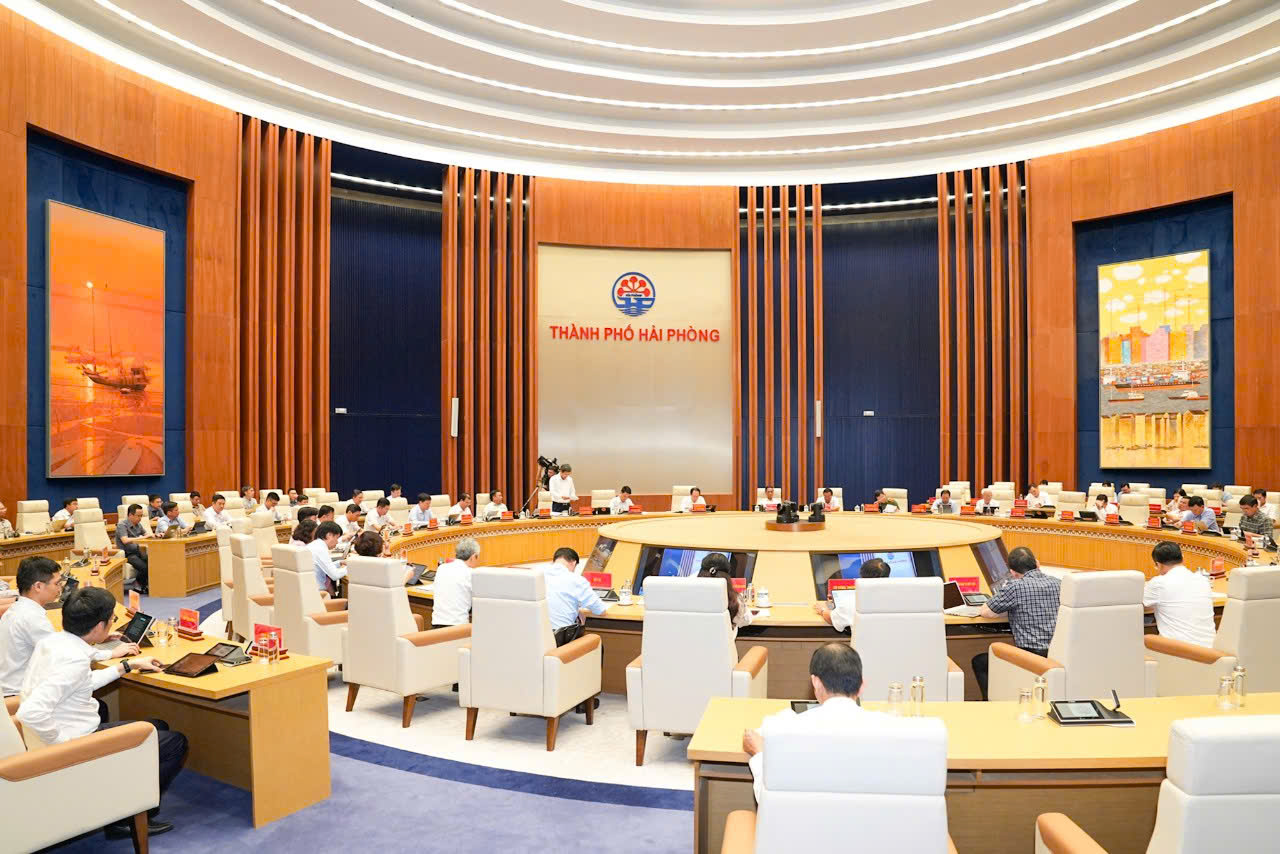
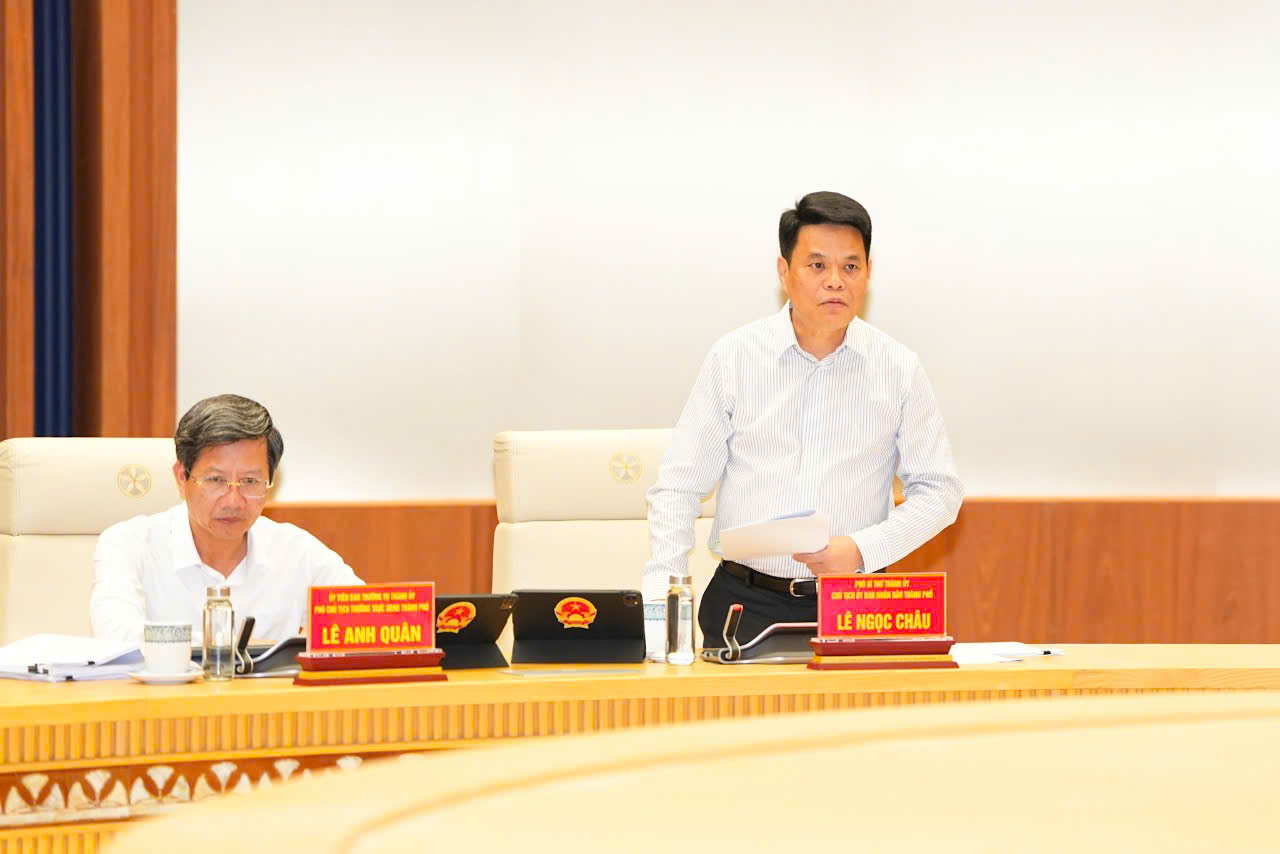
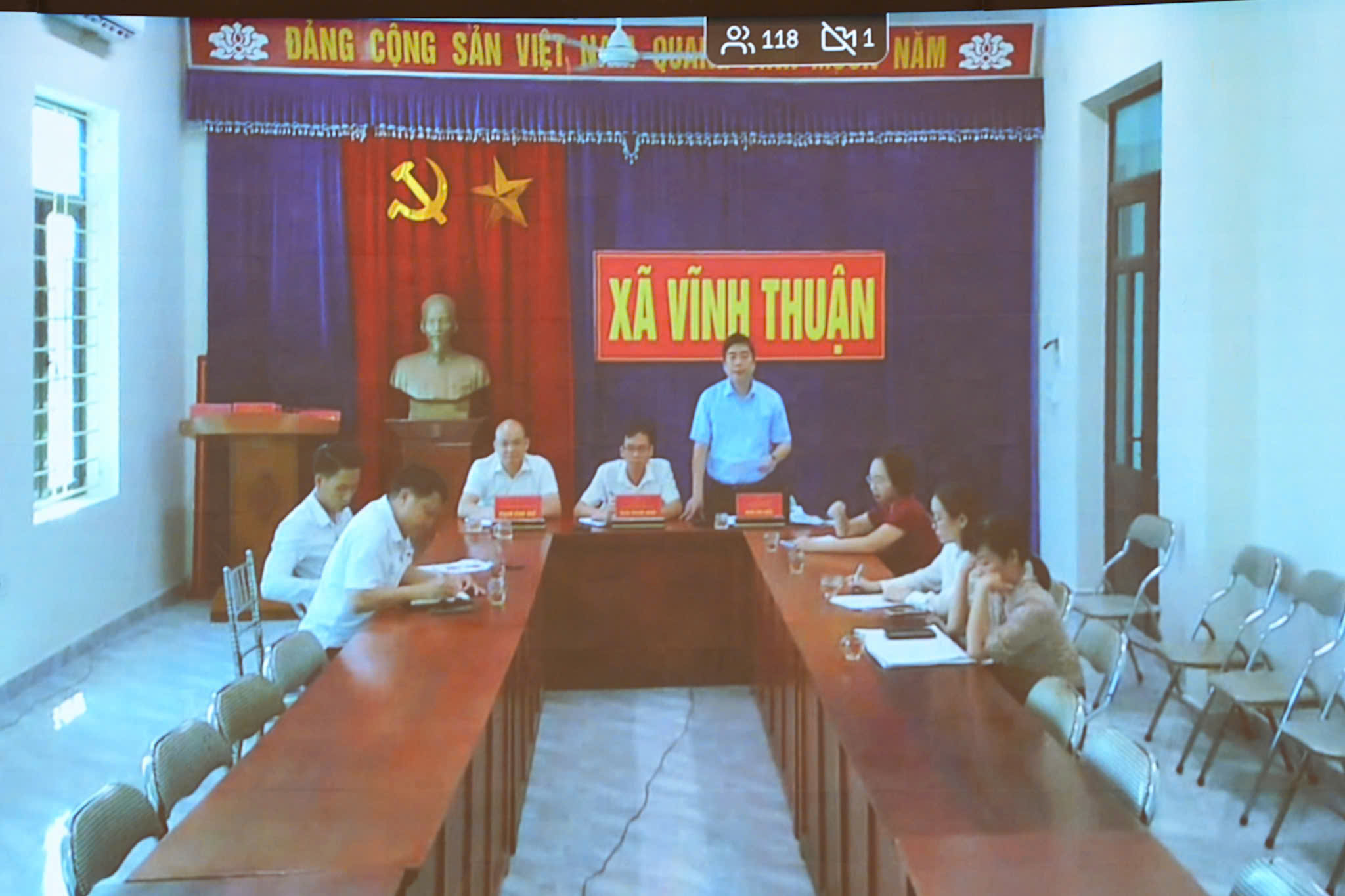
On the afternoon of October 1, Chairman Le Ngoc Chau of the Hai Phong City People’s Committee chaired an online conference with 114 communes, wards and special zones to hear an assessment report on the operation of the two-tier local government model.
The conference was attended by Le Tien Chau, Central Party Committee member, Secretary of the Hai Phong City Party Committee and Head of the City’s National Assembly Delegation; Do Manh Hien, Standing Deputy Secretary of the City Party Committee; Le Van Hieu, Deputy Secretary of the City Party Committee and Chairman of the City People’s Council; members of the Standing Committee of the City Party Committee; Vice Chairpersons of the City People’s Committee; and leaders of departments, sectors and localities.
After three months of operation, the two-tier local government model in Hai Phong has achieved many positive results. State management from the city to the grassroots level has become orderly, and public security and order have been maintained. Attention has been paid to training and developing officials; documents on decentralisation and delegation of authority were issued promptly, creating a clear legal framework and increasing grassroots initiative. Administrative procedures have been standardised and shortened; online public services and digital infrastructure have been deployed synchronously, helping improve services for residents and businesses. Facilities, equipment and personnel have been gradually supplemented to meet operational requirements.
The City People’s Committee inspected 68 communes, wards and special zones, promptly directed the resolution of difficulties and assigned departments and sectors to guide and support localities in addressing obstacles. From July 1 to September 30, 2025, the City People’s Committee and its Chairman assigned 6,084 tasks to departments, sectors and localities; 4,678 tasks had been completed (77%), 1,331 were underway (22%) and 75 were overdue (1%).
At the conference, city leaders and departments, sectors and localities agreed that during the recent period, all levels from the city to the grassroots had promoted solidarity and unity and implemented political tasks synchronously and effectively. Determined, flexible and creative direction and administration helped maintain socio-economic growth and safeguard national defence and security. In particular, the city successfully organised grassroots Party Congresses and the First Congress of the Hai Phong City Party Organisation for the 2025–2030 term in line with the orientations of the central authorities, the City Party Committee and the Party Committee of the City People’s Committee.
Alongside the achievements, the conference clearly identified difficulties and limitations requiring attention: commune-level personnel need to be further supplemented, consolidated and improved; facilities at some Public Administration Service Centres do not yet meet requirements; some administrative dossiers remain delayed or overdue; digital transformation and data connection and sharing are not yet synchronous, especially in civil-status and land matters; and coordination between commune-level authorities and regional project management boards remains inadequate.
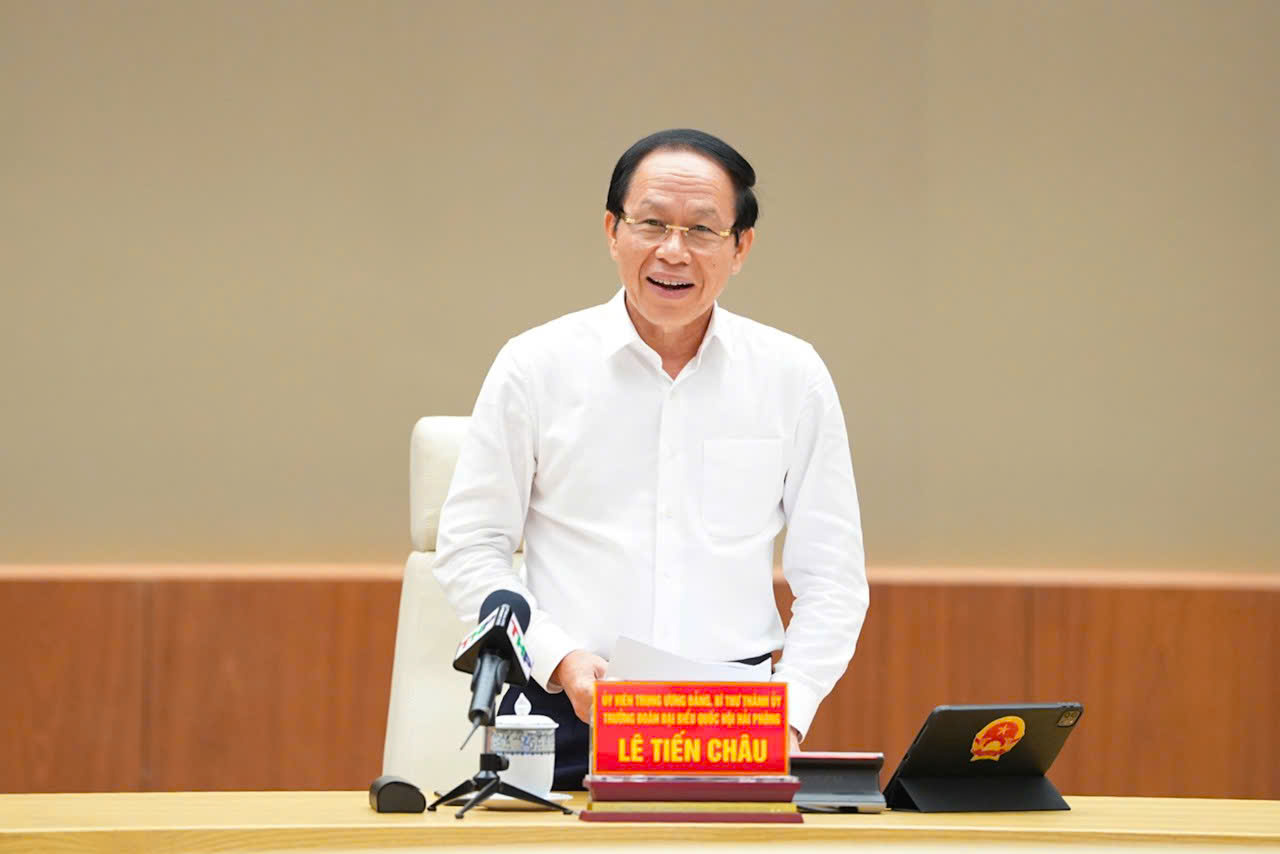
Speaking at the conference, Secretary Le Tien Chau acknowledged and highly appreciated the initial results after three months of operating the two-tier local government model. He highlighted three bright spots: the organisational apparatus and personnel were basically stable; policies for officials taking early retirement were implemented well; and two-tier local governments showed a positive, proactive and responsible spirit in performing their tasks.
The City Party Committee Secretary praised the leadership and direction of the City People’s Committee, especially the close, determined and methodical work of the Chairman and Vice Chairpersons, who have consistently accompanied the grassroots level and removed its difficulties. As a result, the city’s third-quarter socio-economic performance showed many bright spots, creating an important foundation for outstandingly fulfilling the 2025 targets.
Alongside the achievements, the City Party Committee Secretary also shared the difficulties encountered during implementation, including a large volume of new and challenging work, thin staffing, and limited facilities and funding. He pointed out several shortcomings, including an incomplete understanding of the role of commune-level government in the new period. He affirmed that commune-level government is not merely an “administrative service level” that handles procedures, but must become a “level that creates local development” and a favourable environment for residents and businesses.
He stressed the need to correctly assess each locality’s implementation capacity because every commune, ward and special zone has different historical and socio-economic characteristics. Therefore, decentralisation and delegation of authority must be accompanied by commensurate allocation of human resources, equipment and financial mechanisms so that commune-level authorities can act proactively and effectively.
Regarding key tasks for the coming period, City Party Committee Secretary Le Tien Chau asked the City People’s Committee and departments and sectors to strengthen inspection and supervision and promptly remove grassroots difficulties under the principle “the city serves communes and wards, and communes and wards serve the people”. Departments and sectors should regard commune-level authorities as the people they serve and regularly listen and provide support in personnel, facilities, digital infrastructure, legal matters and finance.
He requested the urgent renovation and construction of offices and the supplementation of equipment; a review and adequate placement of specialised officials, especially in land, planning, finance, information technology, education and health, to be completed before October 15, 2025. Regulations on decentralisation and a resolution on additional income for civil servants should soon be issued; the organisation should be streamlined, the operating plan for project management boards completed, and a commune-level financial mechanism built in synchrony with the two-tier local government model.
The City Party Committee Secretary also requested stronger application of information technology, data-based governance and KPI-based official evaluation. Commune-level authorities should proactively implement Party Congress resolutions, coordinate programmes and projects, and strive to complete the 2025 and 2025–2030 socio-economic development targets. At the same time, communication should be strengthened, effective models replicated, exemplary collectives and individuals promptly commended, and cases obstructing development strictly handled.
Concluding the conference, Chairman Le Ngoc Chau of the City People’s Committee accepted the directions of City Party Committee Secretary Le Tien Chau and asked all levels, sectors, localities and units to implement them resolutely and urgently so that the two-tier local government operates effectively and promotes the city’s development./
Source: Hai Phong City Electronic Information Portal