Deputy Prime Minister Tran Hong Ha has signed Decision 423/QD-TTg dated March 11, 2026, approving Hai Phong’s master-planning task to 2050, with a vision to 2075.
Developing Hai Phong into a modern, smart seaport city with international competitiveness
The plan aims to develop Hai Phong as a modern, smart seaport city with strong spillover appeal and international competitiveness; balance economic, social and environmental development; and serve as a model of distinctive, sustainable urban governance that protects resources and adapts to climate change.
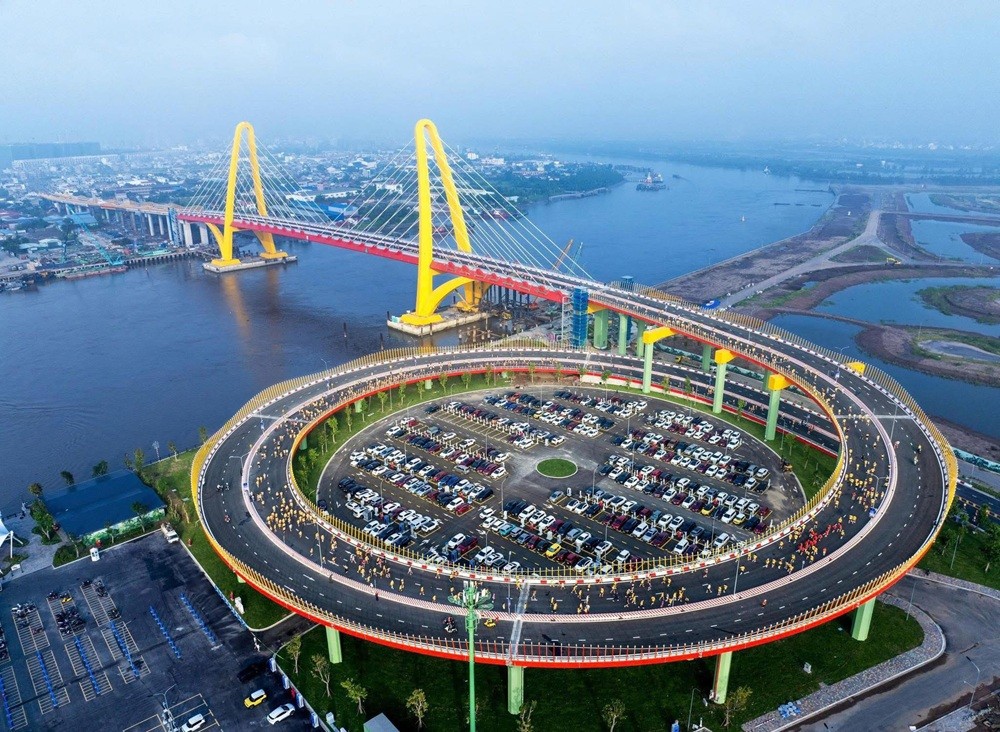
Hai Phong is identified as a growth pole, a marine-economy center and the region’s gateway for international trade.
It will also concretize Hai Phong’s development directions in national and regional socio-economic strategies; provide an important legal basis for urban and rural planning management; shape policies and development drivers; and support the preparation and adjustment of master plans, zoning plans, detailed plans, urban-development programs and plan-based construction investment management.
It will create spatial and infrastructure foundations for cities and centers of culture, marine economy, high technology, innovation, digital transformation and green transformation, while strengthening regional, national and international connectivity.
The natural planning area is approximately 3,194.72 km²
Under the approval, the planning area covers the entire administrative boundary of Hai Phong after the merger under National Assembly Standing Committee Resolution 1669/NQ-UBTVQH15 dated June 16, 2025, and related marine space under current law, including 114 commune-level administrative units.
The planning area is about 3,194.72 km² under National Assembly Resolution 202/2025/QH15 dated June 12, 2025, including the mainland, nearshore islands and island waters.
Population is projected at about 6.50–6.8 million by 2040 and 8.5–9.5 million by 2050.
Urban construction land, excluding land for major infrastructure hubs, is forecast at about 100,000–120,000 hectares by 2040 and 160,000–180,000 hectares by 2050.
Eight core planning requirements
Decision 423/QD-TTg sets out eight core requirements for the master plan:
First, study Hai Phong’s development in close linkage with provinces and cities in the Northern growth region, the Red River Delta and the Hanoi Capital Region, clarifying its role as a growth pole, marine-economy center and international trade gateway.
The master plan’s spatial and infrastructure organization must strengthen regional linkage, complementarity and functional division between Hai Phong and major cities in the region.
Second, review approved plans, identify elements to retain, shortcomings and issues unsuitable to the new development context and post-merger administration, and update and integrate national, regional and sectoral planning directions…
Third, study the transport-infrastructure framework and multimodal hubs in economic growth areas, linked to seaports, airports, national railways and waterways.
Clarify the role of the Lao Cai–Hanoi–Hai Phong and Dong Anh–Gia Binh–Ha Long railways; study urban rail and transit-oriented development in key areas; and ensure phased, integrated connections with provinces in the Hanoi Capital Region and Red River Delta.
Fourth, study spatial development directions for key city areas, focusing on rebuilding and upgrading old urban areas and the historic center.
Also establish natural-framework planning and urban-landscape design for riverside and coastal waters; identify ecological conservation zones, transition buffers and controlled-development areas; preserve urban architectural values; and study links between marine space, seaports, tourism space and marine ecological conservation areas.
Fifth, develop modern and specialized industrial-zone, industrial-cluster and logistics-service networks integrated with transport infrastructure and multimodal hubs, ensuring efficient land use, environmental control and alignment with the marine-economy strategy.
Sixth, propose concentrated, clean and high-tech agriculture models linked to specialty-production zones; organize rural settlement space in line with urbanization while ensuring sustainable livelihoods and rural identity.
Seventh, guide underground-space and technical-infrastructure development in accordance with law and resolve shortcomings caused by overlapping internal and external transport…
Eighth, propose solutions for synchronized, modern, high-quality socio-economic infrastructure and address urban and rural environmental issues toward sustainable development.
Source: Hai Phong Center for Investment Promotion, Employment and Business Support