South Korean electronics group LG now has three LG Display factories: two in South Korea and one in Hai Phong, Vietnam…
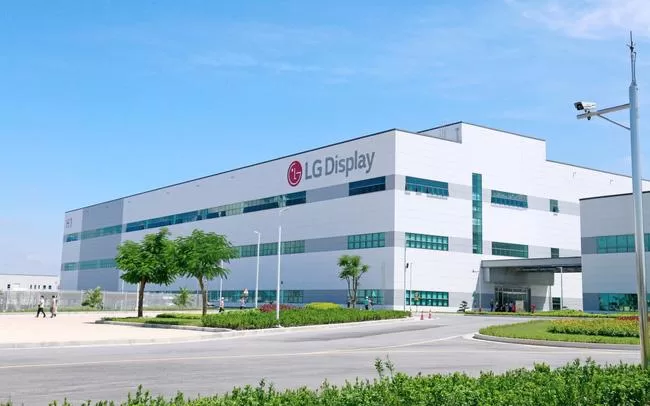
LG Display Vietnam Haiphong factory
LG Display recently completed the transfer of its large-size LCD panel and module production plant in Guangzhou to China Star Optoelectronics Technology (CSOT), a subsidiary of TCL. The deal was finalized at KRW 2.2466 trillion, equivalent to approximately USD 1.54 billion, more than KRW 200 billion above the initial expectation, according to Business Korea.
The agreement officially marks LG Display’s complete withdrawal from the LCD business, allowing it to focus resources on expanding its strategy and developing OLED technology.
In fact, LG Display and LCD had signed the transfer agreement as early as September last year. However, several factors, including exchange-rate movements, affected the process. From the time the agreement was signed until now, the yuan exchange rate rose from KRW 187.56 to KRW 200.82, contributing to the increased value of the transaction.
The transfer was not actually completed until the beginning of this month, when TCL renamed the Guangzhou factory “T11” and began full operations on April 1. TCL will pay LG Display the purchase amount in several installments throughout this year.
The funds will provide LG Display with additional resources to upgrade facilities, strengthen research and development, and cover operating expenses, thereby consolidating its competitiveness in the OLED sector.
While selling its factory in China, LG expanded investment in LG Display Vietnam Haiphong early this year, increasing total investment from USD 4.65 billion to USD 5.65 billion, a USD 1 billion increase. The facility specializes in producing small- and medium-sized OLED displays for phones, smartwatches, tablets and other handheld devices, with average capacity reaching 14 million products per month.
After the latest transaction, LG has three LG Display factories: two in South Korea and one in Hai Phong, Vietnam. After eight years of continuously expanding its operations, LG now provides jobs for more than 22,000 workers, with average annual exports of USD 5.8 billion and average annual budget contributions of VND 1 trillion.
The divestment reflects a broader trend in the display industry, as many companies shift from LCD to OLED technology.
The company’s financial outlook has also become more positive after the transaction. Last year, LG Display recorded an operating loss of KRW 560.6 billion, a sharp decrease from the loss of more than KRW 2,510.2 billion the previous year. With clear signs of recovery, the company forecasts a return to profit this year, with estimated operating profit of KRW 652.3 billion.
Over the years, LG has withdrawn from several business segments, either because they were inefficient or to restructure its strategy.
In the early 2010s, LG Electronics was once one of the world’s leading mobile phone manufacturers. Its prominent Nexus, G-series and V-series phones achieved considerable success. However, a lack of design innovation and an insufficiently strong marketing strategy prevented LG from competing with Apple, Samsung and Chinese companies such as Huawei and Xiaomi. In 2021, LG was forced to announce its withdrawal from the mobile phone business, reportedly because of prolonged losses and an inability to compete with major rivals.
Similarly, in 2014–2015, LG stopped producing and withdrew from the plasma panel business after determining that the technology was no longer suited to market demand and could not compete with newer display technologies such as LCD and OLED.
Previously, LG also participated in producing computer components such as RAM and optical drives through the LG-Hitachi joint venture. However, as the market for optical drives and other computer components declined, LG decided to leave this segment in the 2000s and focus on more profitable products.
Source: VnEconomy