On the afternoon of March 28, 2025, the Hai Phong Economic Zone Authority coordinated with the city Post Office to hold a seminar on “Optimal Logistics Solutions for Businesses in Hai Phong’s Industrial and Economic Zones”.
The event brought together 100 businesses, creating a lively forum for policymakers, experts, service providers and the business community to exchange experience and solutions to improve logistics efficiency, reduce costs and strengthen supply-chain connectivity. It also gave Hai Phong an opportunity to promote logistics solutions linked to green transition and sustainable development, while helping businesses learn about effective services and cooperation models.
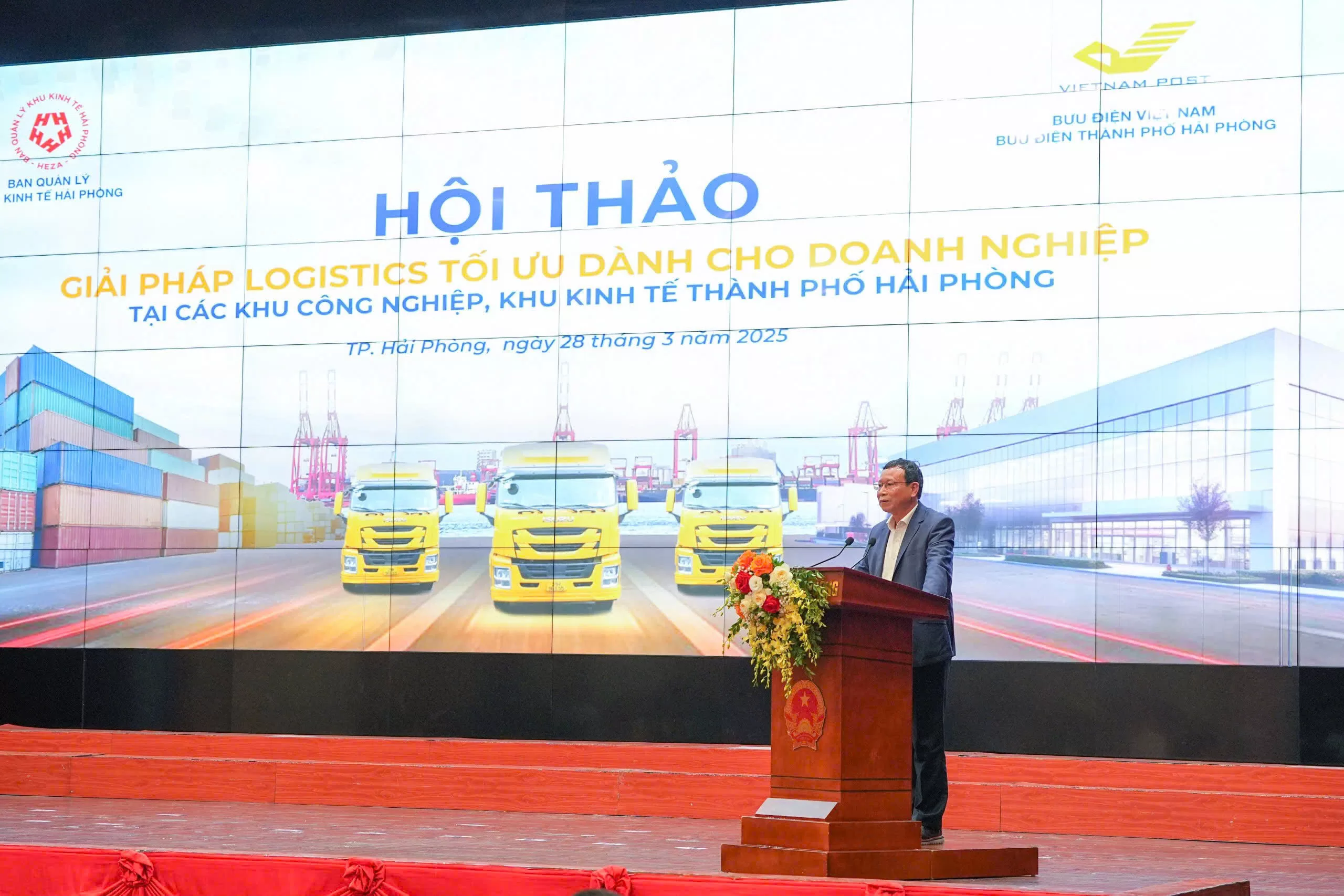 Bui Ngoc Hai, Deputy Head of the Hai Phong Economic Zone Authority, speaks at the seminar.
Speaking at the seminar, Bui Ngoc Hai, Deputy Head of the Hai Phong Economic Zone Authority, emphasized Hai Phong’s role as a key logistics center of the northern region and the country. With outstanding advantages, the city has proactively built a modern and integrated logistics system focused on large-scale hubs such as Dinh Vu–Cat Hai, Nam Dinh Vu and VSIP. These areas not only store and transship goods but also serve as important links in the global supply chain, closely connected with industrial parks, seaports and strategic transport systems.
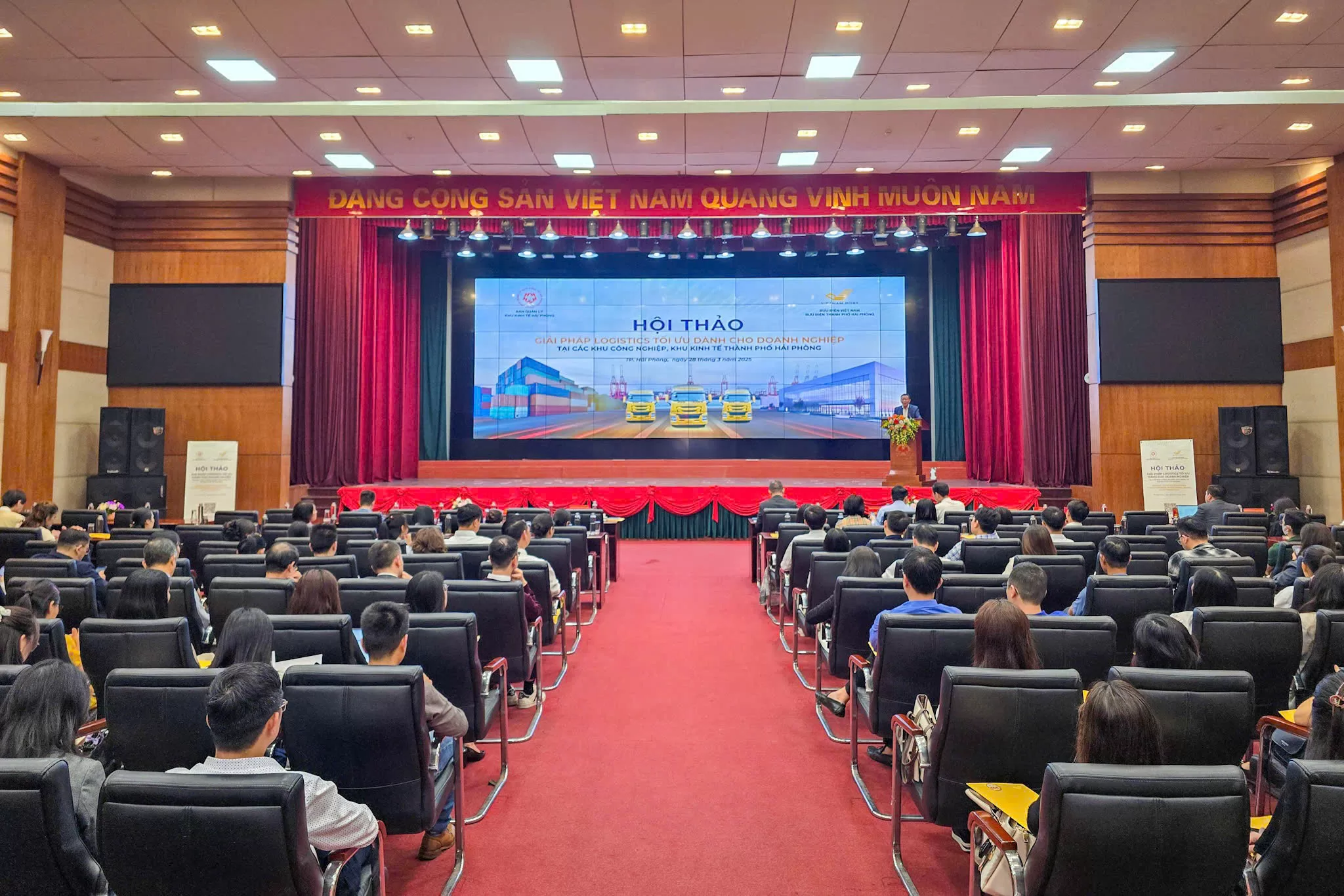
Overview of the seminar.
According to Bui Ngoc Hai, Hai Phong’s logistics sector is maintaining an impressive annual growth rate of 20–23%, contributing 13–15% to the city’s GRDP. The city currently has about 250 logistics businesses, a workforce of more than 170,000 people and 60 large warehouses covering over 700 hectares, concentrated around key port areas such as Dinh Vu, Tan Vu, Chua Ve, Hoang Dieu and Hai An. However, he frankly noted that Hai Phong’s logistics potential has not been exploited in proportion to its position as a marine economic center and international trade gateway. Logistics costs in Vietnam, including Hai Phong, remain high compared with regional countries, putting considerable pressure on business competitiveness. Supply-chain links among businesses remain weak, and cooperation between logistics companies and production, import and export enterprises is mostly short-term, without a long-term partnership strategy.
In response to these challenges, Hai Phong has set specific orientations to strengthen links between logistics businesses and the production, trade, import and export sectors. The city aims to build closed supply chains, accelerate digital-technology applications, develop soft infrastructure and focus on training high-quality human resources to meet market demand. Hai called on local businesses to strengthen cooperation and prioritize domestic logistics services, thereby leveraging internal capacity and building a sustainable logistics ecosystem. He also encouraged service providers to proactively understand business needs and offer optimal solutions instead of limiting themselves to a traditional supply role.
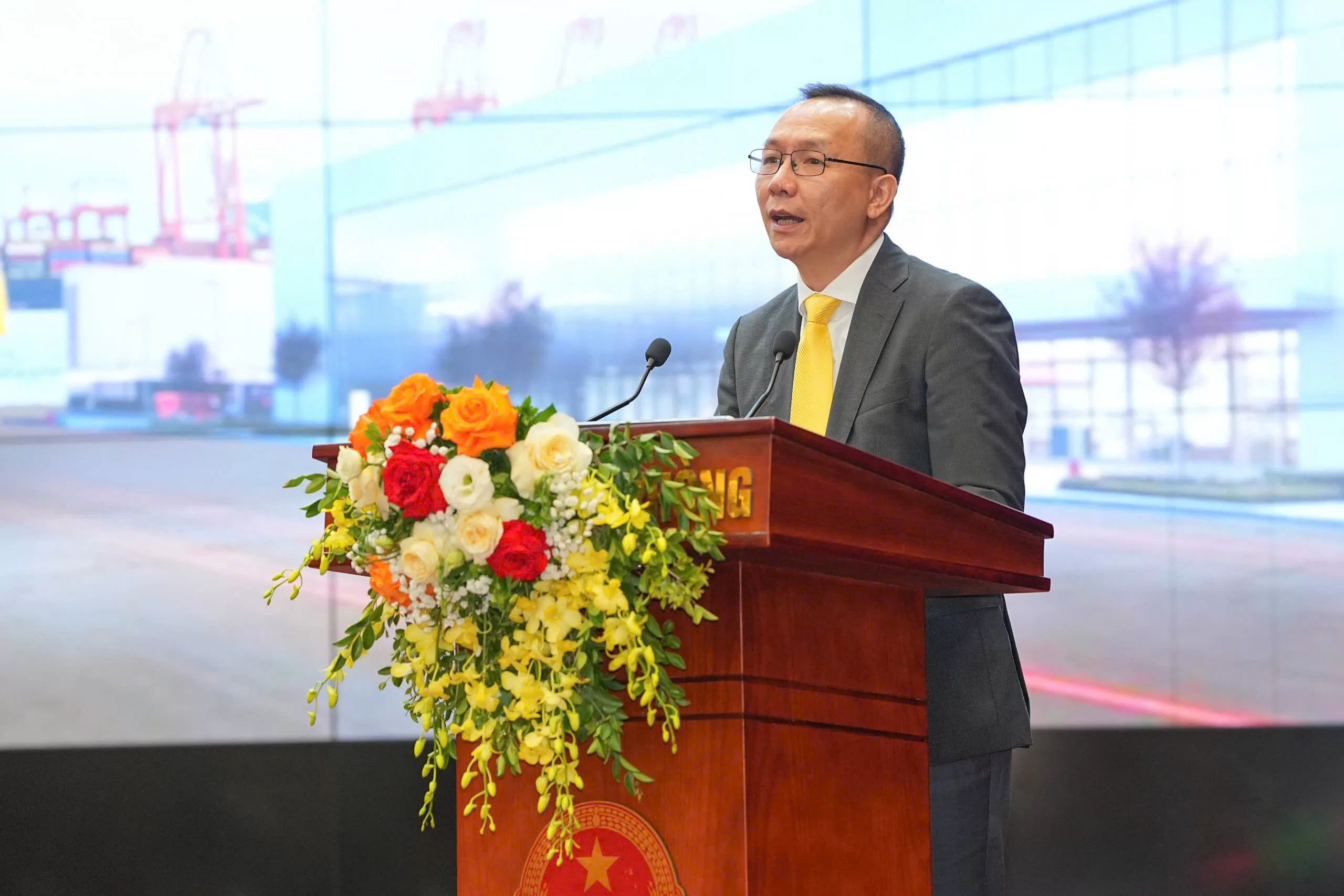
Le Quoc Anh, Deputy General Director of Vietnam Post, speaks at the seminar.
Representing Vietnam Post, Deputy General Director Le Quoc Anh said that Vietnam Post currently owns leading logistics infrastructure, with more than 13,000 service points covering 100% of communes and wards, 14 major sorting centers, 200 warehouses, an interprovincial transport fleet and a delivery network reaching more than 190 countries. “Vietnam Post not only serves residents but is also ready to accompany Hai Phong businesses with tailor-made logistics solutions, providing green and digitalized infrastructure and strong connectivity,” Anh affirmed.
The seminar was not only an opportunity for Hai Phong to affirm its logistics potential but also a concrete step toward becoming a modern, efficient and internationally oriented logistics center in the near future. With support from the authorities and the partnership of businesses, logistics is expected to become an important driver of the city’s sustainable development.
Employment, Training and Investment Promotion Service Center