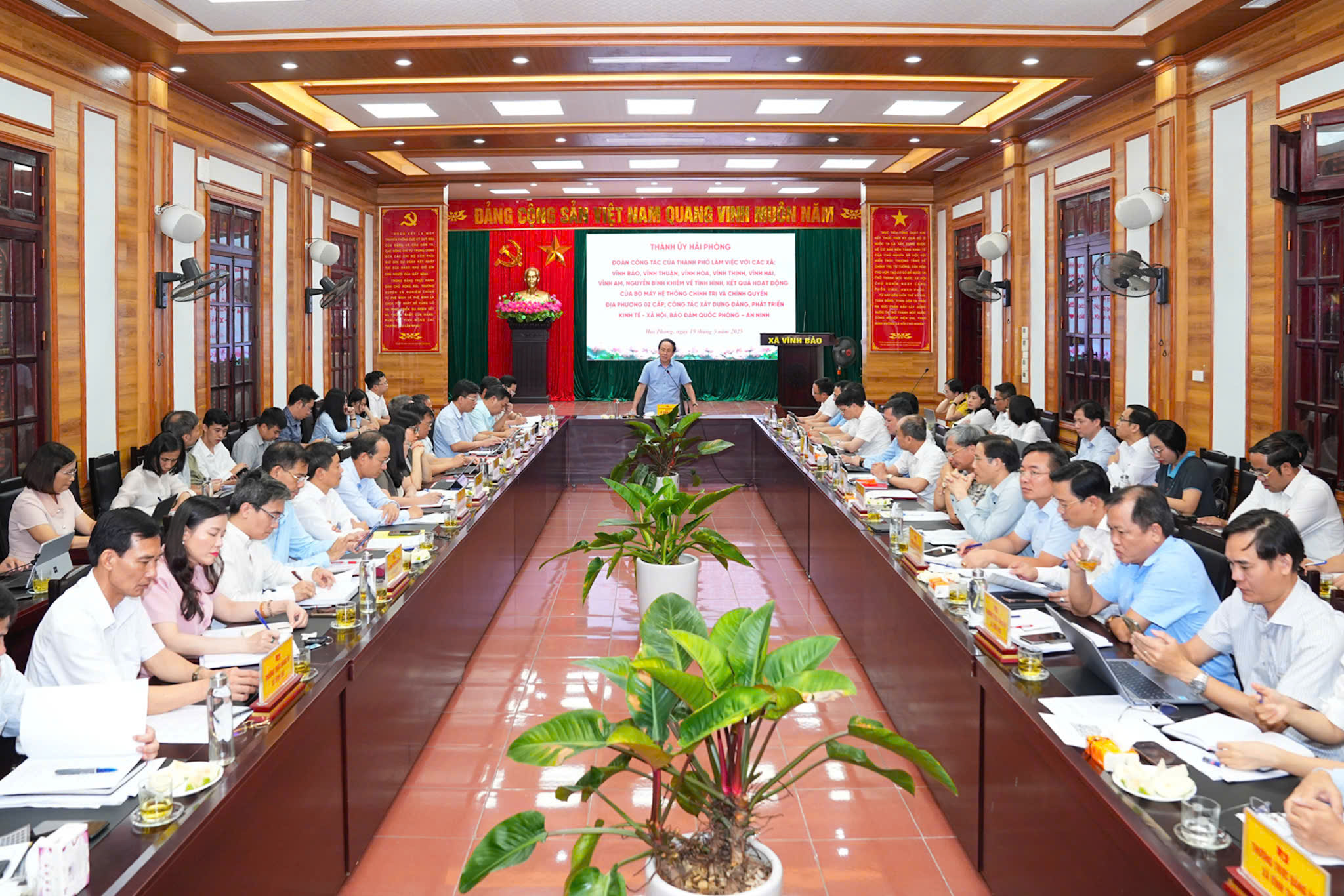
On the morning of September 19, Le Tien Chau, a member of the Party Central Committee, Secretary of the Hai Phong City Party Committee and Head of the city’s National Assembly Delegation, chaired a working session with the communes in the city’s southern industrial development belt, namely Vinh Bao, Vinh Thuan, Vinh Hoa, Vinh Thinh, Vinh Hai, Vinh Am and Nguyen Binh Khiem, on the situation and results of two-tier local-government operations; Party building; socio-economic development; and national defence and security.
The meeting was attended by members of the Standing Committee of the City Party Committee; leaders of the City People’s Council and City People’s Committee; the Party Committee of the city’s Party agencies; and leaders of relevant city departments and sectors.
After more than two months of implementation, the political system and two-tier local governments in the seven communes have been consolidated and have initially operated stably and systematically, improving effectiveness and efficiency in management, administration and serving the people. Attention has been paid to Party building and the building of the political system; the leadership capacity and combat strength of grassroots Party organisations have gradually improved, while administrative discipline and order have been strengthened. Reducing the number of government levels from three to two has streamlined the apparatus, reduced intermediate layers and shortened the time and cost of administrative procedures for residents and businesses. Public Administration Service Centres have operated effectively and basically met work requirements; the rate of applications processed on time has been very high, reaching nearly 100% in many communes, and the rate of online applications has also been relatively high. At the same time, the communes have focused on implementing Party congress resolutions, developing the socio-economy, ensuring social security and maintaining national defence and security.
The communes have also focused on planning and identifying development orientations. They have simultaneously concentrated on site clearance for key projects such as Tran Duong–Hoa Binh Industrial Park; Vinh Quang Industrial Park; the 500 kV power line; Trung Lap Industrial Park; the road connecting National Highways 5 and 10; and the Vinh Quang Industrial Park in Vinh Hai, where site clearance is underway, as well as the Dung Tien–Giang Bien Industrial Cluster.
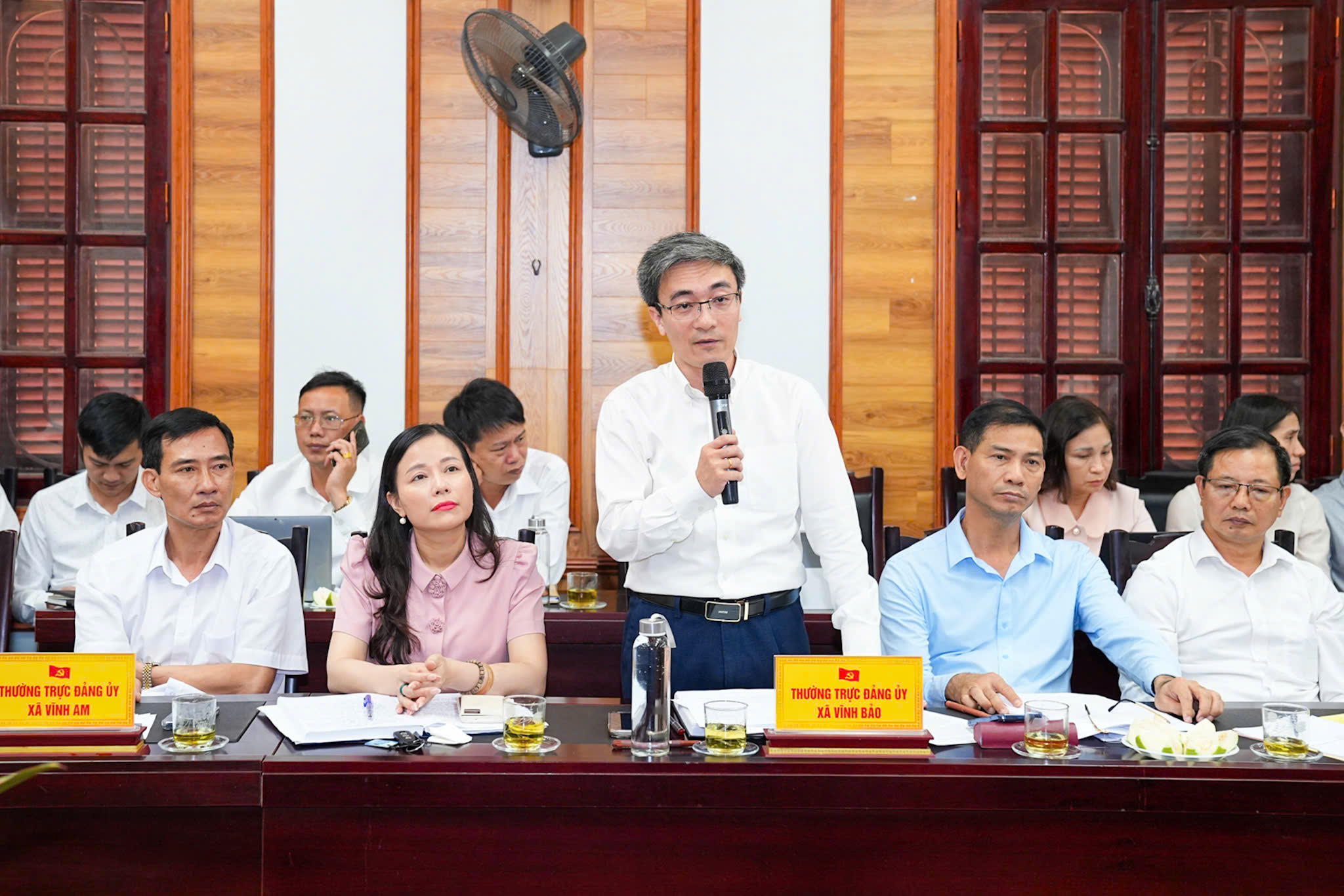
However, according to the communes, many difficulties and obstacles remain, including understaffing; a heavy workload causing overload and pressure; uneven qualifications and capacity among officials; and a shortage of specialised expertise in fields such as land management, finance, construction, information technology, health and education. Job positions have not yet been arranged in full accordance with training backgrounds. There are also difficulties concerning facilities, offices and information-technology infrastructure. Some communes have low budget revenues; some localities report that they have no dedicated project management board, making it difficult to take the initiative in site clearance and accelerate construction progress. Land management and planning also face many obstacles.
At the meeting, the communes asked the city to soon develop a plan for civil-service examinations at commune level; transfer and reinforce local staffs with professional qualifications in information technology, land management, planning, construction, health and education from city departments and sectors; allow communes to sign labour contracts; add staff positions to meet assigned quotas; consider adding deputy heads for specialised divisions; promptly approve job-position schemes for commune public-service centres; and issue guidance on plans for ensuring commune-level staffing.
They also proposed increasing investment in facilities, offices, information-technology infrastructure and Public Administration Service Centres; resolving financial and budgetary obstacles; promptly issuing specific policies to support key agricultural production areas; soon issuing documents on decentralised management in various fields so localities can implement them more easily; and directing investors to urgently accelerate new-rural construction projects, industrial clusters and several roads in the area. They also asked the city to soon implement important transport projects and industrial parks and clusters in Vinh Thuan and Vinh Hai communes.
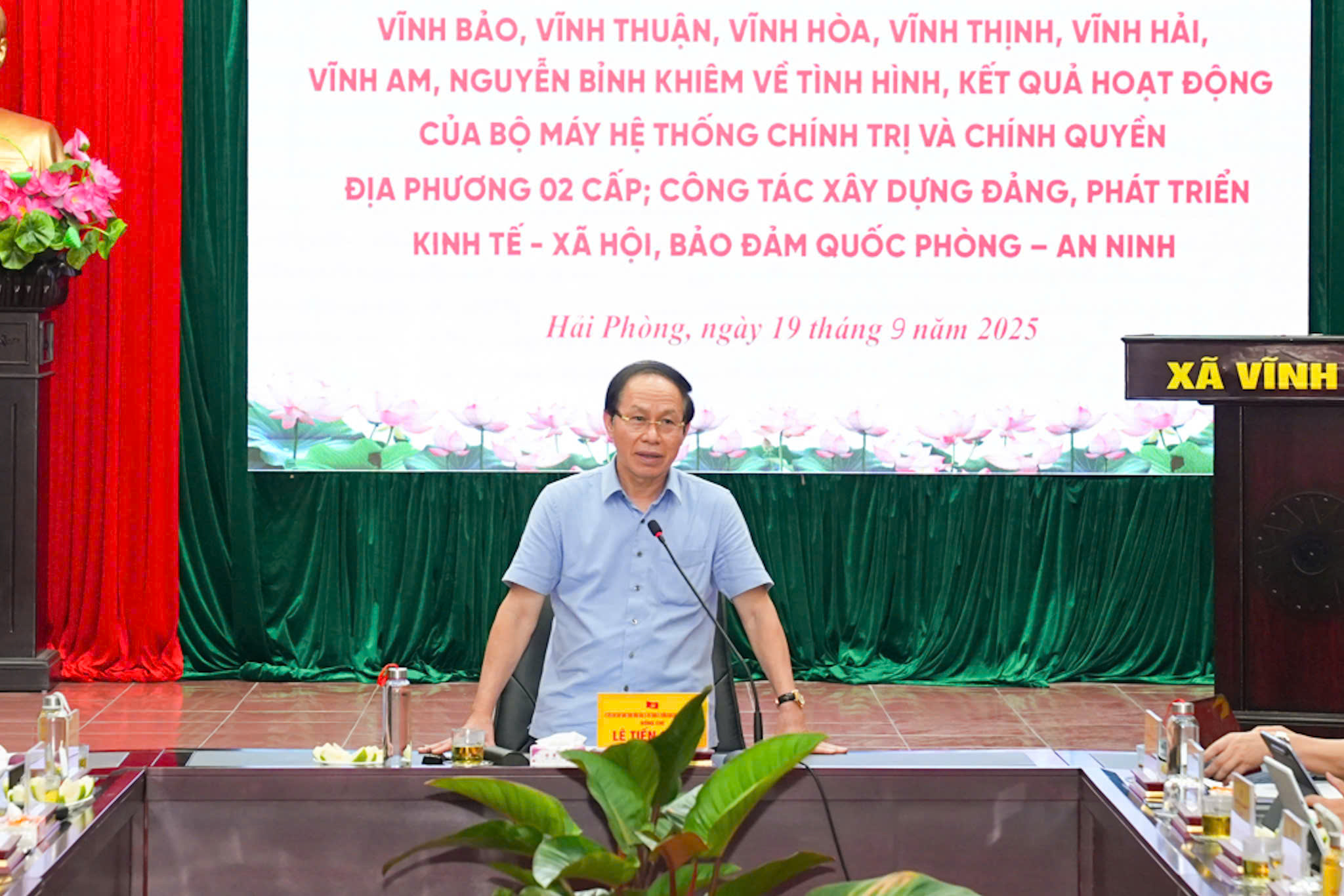
After conducting field inspections in Vinh Hai and Vinh Am communes and hearing opinions from leaders of city departments and sectors, Secretary Le Tien Chau acknowledged and commended the Party committees, local authorities and political systems of the communes for their proactive, active and diligent performance of their duties and their strong sense of responsibility. In particular, they had successfully organised the First Party Congress for the 2020–2025 term. Tasks concerning socio-economic development, national defence and security, and social security have continued without interruption or administrative gaps in any locality or field.
Sharing the communes’ current difficulties and obstacles, the Secretary of the City Party Committee also pointed out several shortcomings and limitations. Some localities still face urgent problems involving environmental pollution, waste and domestic water, including mini water plants, which require action. The implementation of the Congress Resolution remains slow in some communes; in one exceptional case, a commune has not yet issued an action programme to implement the resolution.
Regarding tasks requiring focused direction in the coming period, the Secretary of the City Party Committee asked localities to continue strictly implementing the policies of the Party Central Committee and the directions, plans and programmes of the City Party Committee and City People’s Committee. They must regularly and promptly coordinate with relevant city departments and sectors according to their fields of expertise to resolve difficulties and obstacles and limit bottlenecks in operations and task implementation. Attention should be paid to the key tasks and breakthrough measures set out in the Congress Resolution, while making maximum use of each locality’s distinctive advantages to lead, direct and organise socio-economic development. At the same time, localities must proactively propose long-term development solutions that build on the new potential and opportunities created by the merger of the two localities, avoiding waste of resources.
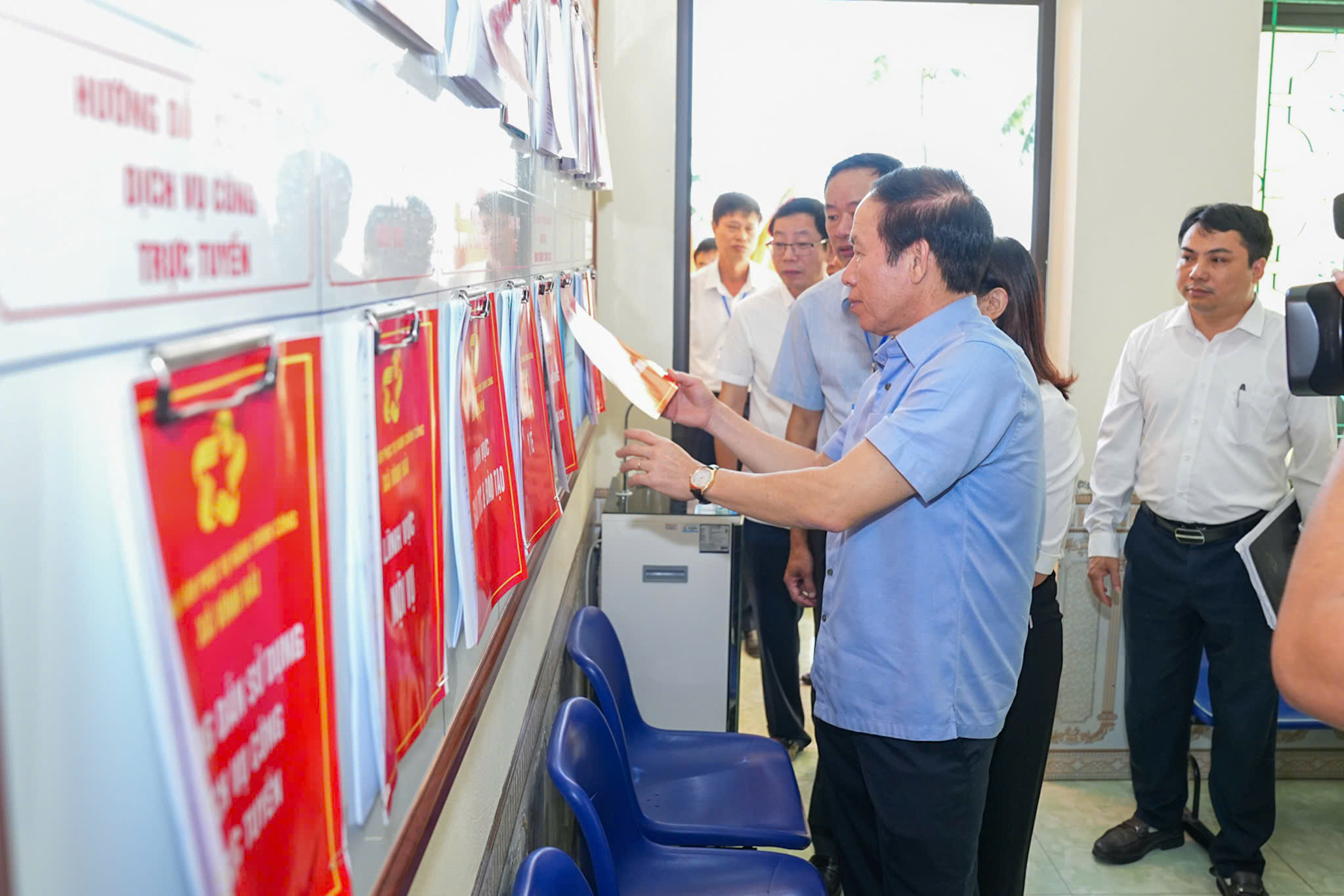
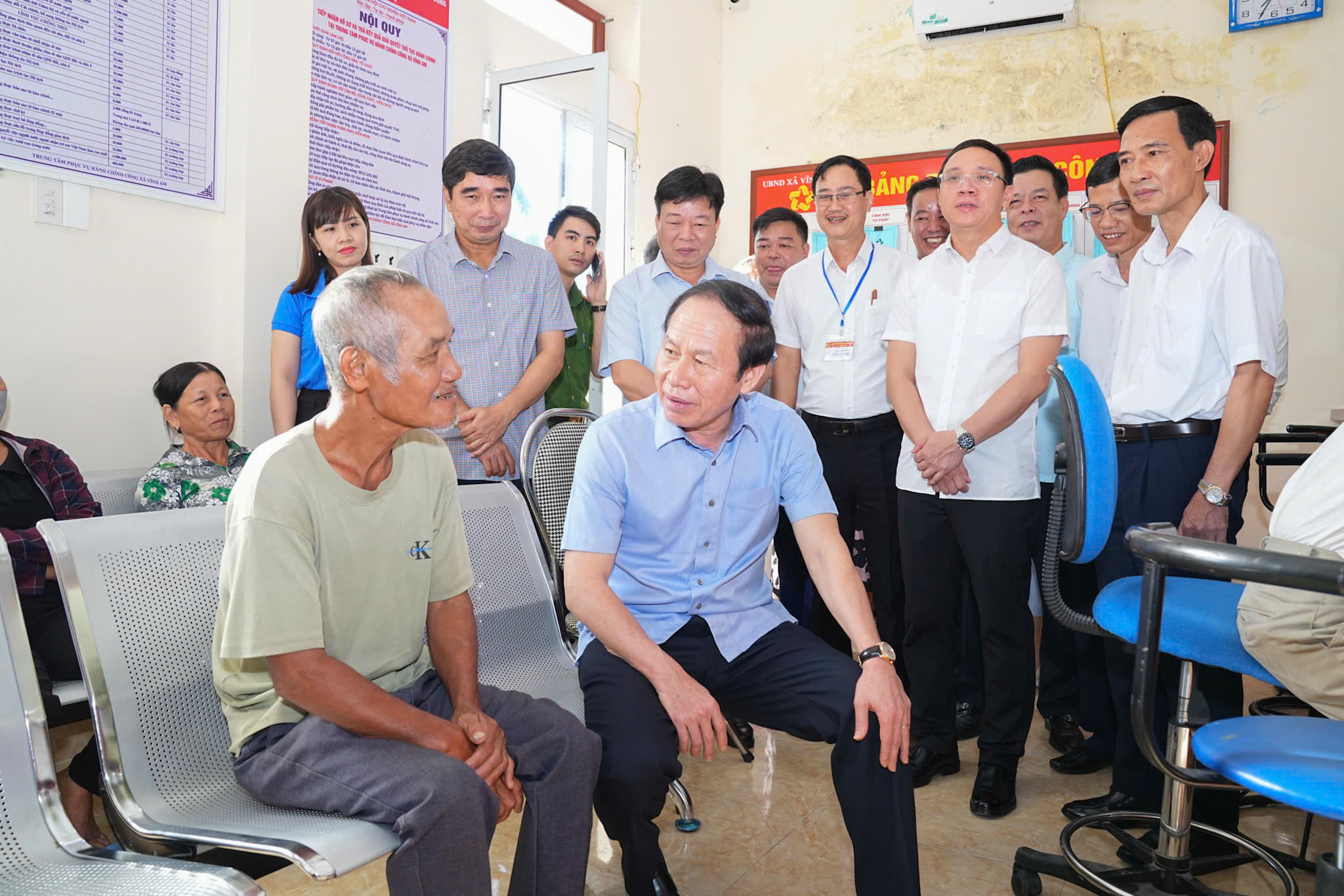
To implement the Resolution of the Party Organisation Congress for the 2025–2030 term locally, the Secretary of the City Party Committee directed the Standing Committees of the Party Committees to urgently complete and issue action programmes for implementing the Congress Resolution in accordance with the “six clear” approach, completing them in September 2025.
For Party Organisations that have already issued action programmes, the Resolution of the City Party Organisation Congress should be incorporated into their own programmes in accordance with each locality’s practical conditions, particularly the targets of the City Party Organisation Congress. Communication, dissemination and implementation of the Resolution and its action programme should also be strengthened to create clear changes in the awareness, actions and responsibilities of Party committees, officials, Party members, civil servants, public employees and workers.
The Secretary of the City Party Committee asked the communes to proactively and completely resolve difficulties and obstacles arising during implementation of the two-tier local-government model. Specifically, they must proactively overcome and resolve issues within their responsibilities and authority. For issues beyond their authority, they must clearly identify the responsible department or sector so that proposals can be made promptly, while maintaining hotlines with relevant departments and sectors for immediate resolution.
The Secretary of the City Party Committee directed the communes to focus strongly on socio-economic development; coordinate with sectors to adjust planning; prepare administrative-boundary maps and dossiers; and accelerate key driving projects. They must proactively implement decentralised tasks and focus on issues that could cause public frustration, especially waste, the environment and public order. They must also carefully prepare for congresses of the Viet Nam Fatherland Front and mass organisations, as well as elections of National Assembly deputies and People’s Council deputies at all levels for the 2026–2031 term.
The Secretary of the City Party Committee acknowledged the communes’ proposals and recommendations and assigned the Party Committee of the City People’s Committee to direct the sectors to resolve them. Priority issues include promptly completing a proposal on additional income payments for officials, civil servants and public employees; studying a commune-level project management board model; continuing to transfer, rotate and second staff to communes, especially land, construction, education and health officials; advising on investment in, construction of and renovations to commune offices; addressing shortcomings in commune-level financial mechanisms, initially by advancing funds so communes can resolve immediate difficulties; allocating medium-term capital for 2026–2030 to restore the Nguyen Binh Khiem Heritage Site; issuing digital signatures and digital certificates; providing information-technology equipment; preparing a handbook on commune-level functions and duties; proposing support for high-quality agricultural production areas; developing large-scale livestock farming; directing the definitive resolution of inefficient mini water plants; and completing cadastral digitisation.
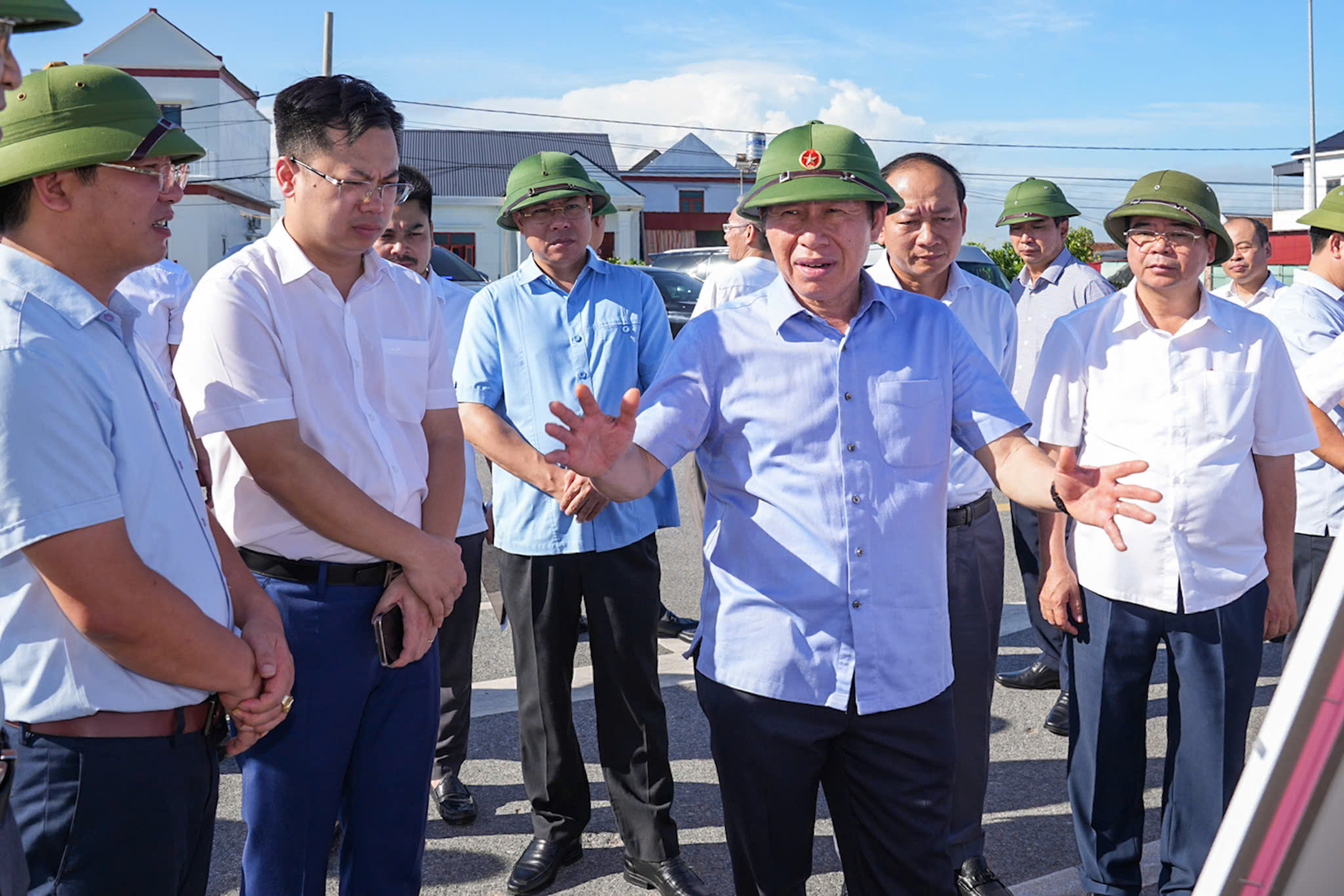
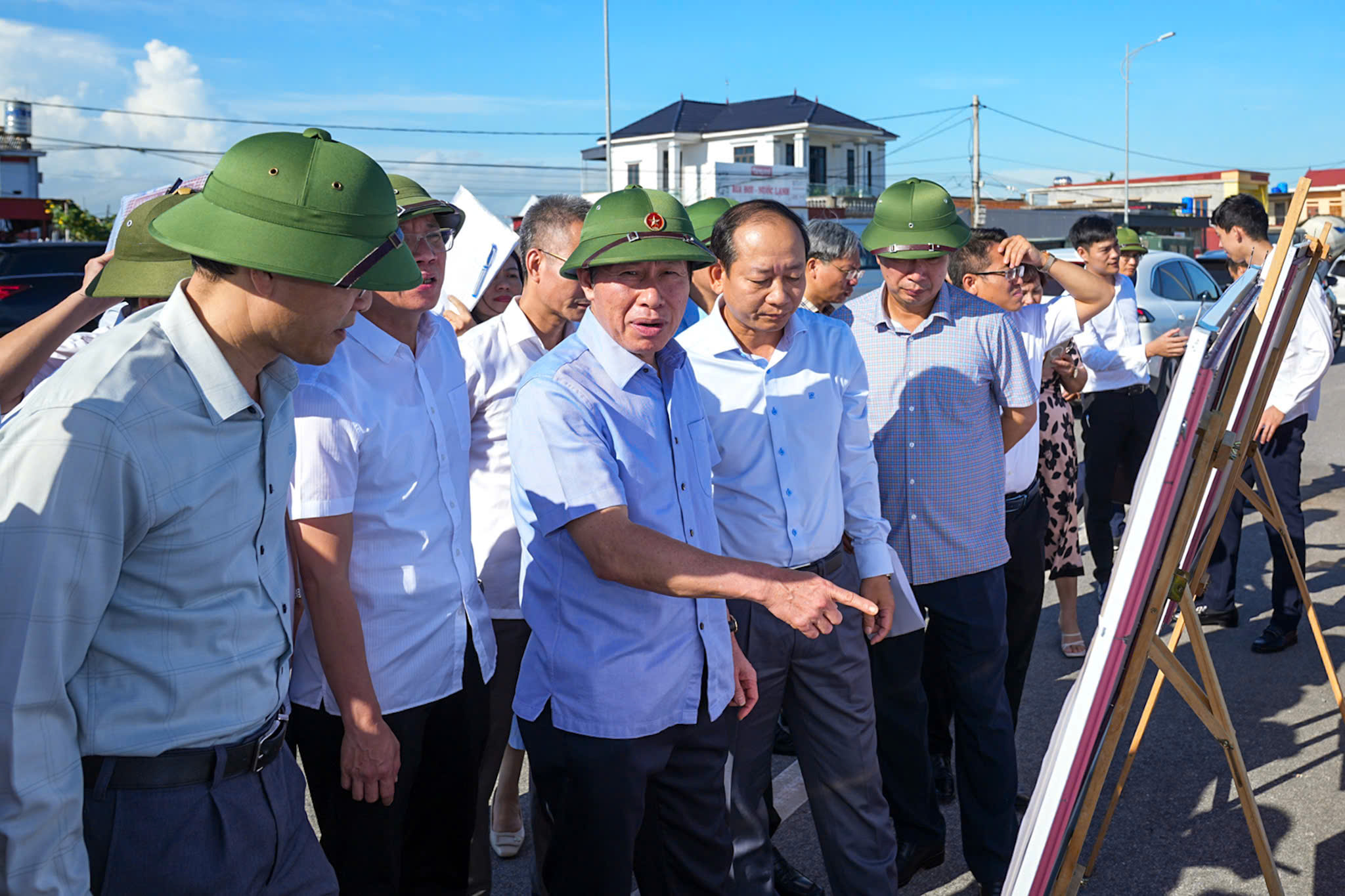
Earlier, the Secretary of the City Party Committee and the working delegation inspected progress on Vinh Quang Industrial Park and industrial clusters in the area. The Secretary asked the Hai Phong Economic Zone Authority, investors and localities to coordinate closely, focus strongly on site clearance, urgently break ground on infrastructure construction and call for investment.
The Secretary and the delegation offered incense at the Temple of Scholar-Trang Nguyen Binh Khiem and heard a report on preparing the dossier to request UNESCO recognition for Nguyen Binh Khiem. He asked the city to urgently consolidate the mobilisation committee and complete the dossier for submission to UNESCO to honour Nguyen Binh Khiem on the 450th anniversary of his death (1585–2035). He also assigned the Department of Finance to balance and arrange the implementation funds, while city sectors and localities were asked to continue effectively publicising Nguyen Binh Khiem’s life, career and contributions to the country and the city./
Source: Hai Phong City Electronic Information Portal