Every autumn, the sacred land of Con Son–Kiep Bac (Tran Hung Dao Ward) comes alive with festival activities associated with the Vietnamese tradition of commemorating the nation’s founding fathers in the eighth lunar month.
The nation’s cultural spirit
The Con Son–Kiep Bac autumn festival is held every year to commemorate the death anniversary of national hero Tran Hung Dao, on the 20th day of the eighth lunar month. The festival is not merely a cultural and religious activity; it is also a day to honour, remember and express gratitude to previous generations.
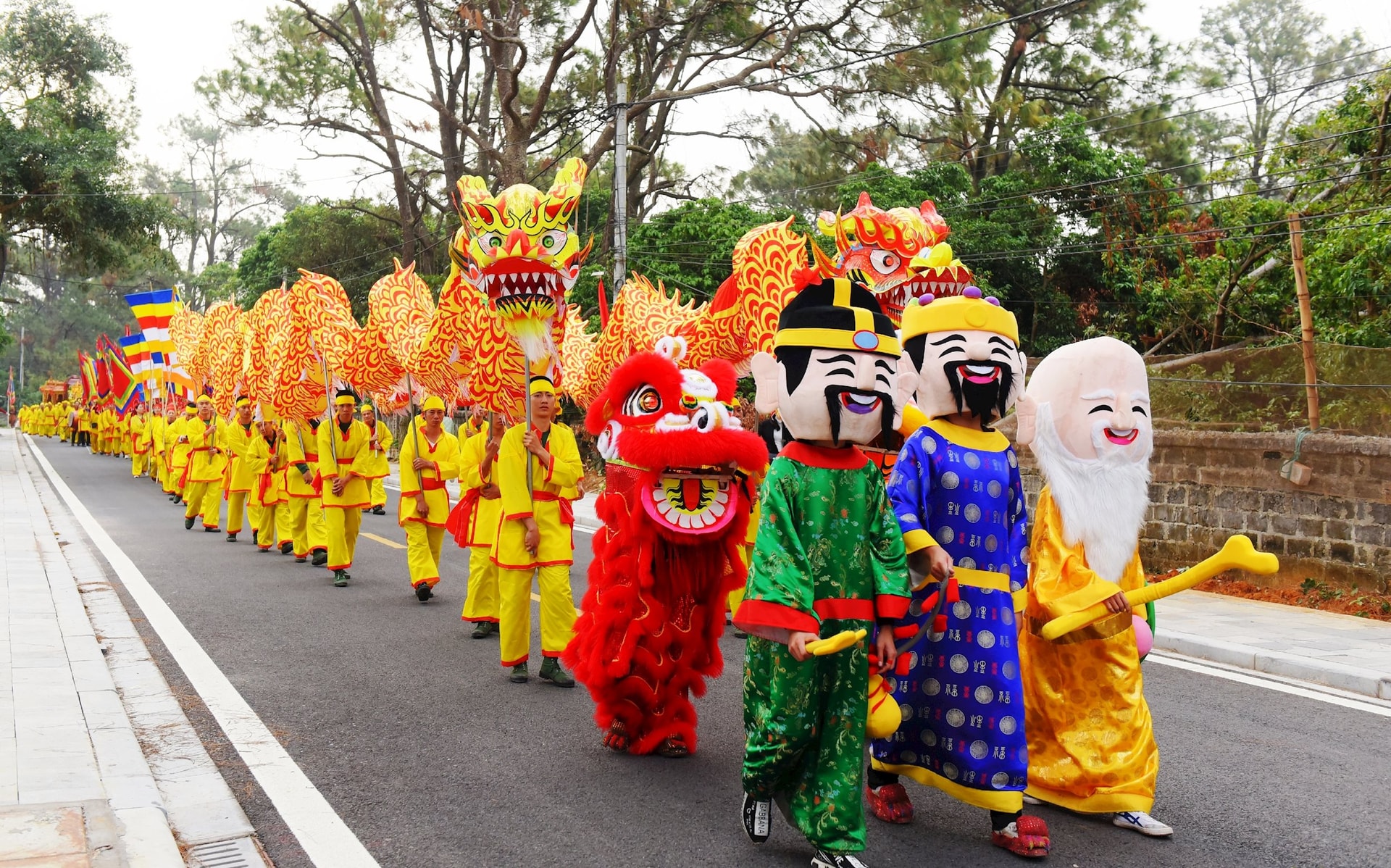
At Kiep Bac Temple, the festival space is filled with the scent of incense, resounding gongs and drums, and the clear calls of village elders during flag processions and ceremonial rites. Traditional rituals such as seal opening, prayers for peace, processions on foot, flag worship and commemorative incense offerings are solemnly recreated, associated with the dignified image of Tran Hung Dao, the national commander.
The ceremonial and procession teams, dressed in traditional costumes, move solemnly to the accompaniment of traditional ritual music. Kiep Bac Temple seems to glow with sacred energy.
At Con Son, which is associated with the life and career of national hero and World Cultural Figure Nguyen Trai, temple bells and wooden fish resonate while an incense-offering ceremony at Nguyen Trai’s temple is held solemnly to commemorate the great intellectual who devoted his entire life to the country. Visitors feel as if they are returning to glorious pages of history and can sense the nation’s cultural spirit in every ritual.
According to Le Duy Manh, Deputy Head of the Con Son–Kiep Bac Relic Management Board, the festival is no longer held separately at the two relic sites but has become one increasingly large-scale space with a profound influence on the cultural life of Red River Delta residents. The Con Son–Kiep Bac festival has been recognised as national intangible cultural heritage, with many ceremonies and rituals embodying the feelings, intelligence, customs and practices typical of northern delta communities.
Pham Thi Lien, a visitor from Hanoi, said: “I was deeply moved to attend the procession on foot. The sight of hundreds of residents and visitors turning together toward Kiep Bac Temple, solemn and reverent at the same time, made me clearly feel the spirit of solidarity and national pride.”
Connecting the community, spreading values
The Con Son–Kiep Bac autumn festival is not only a ceremony remembering the contributions of previous generations; it is also a major festival for the people. Local residents have long regarded it as an occasion for descendants from across the country to return to their roots with national pride.
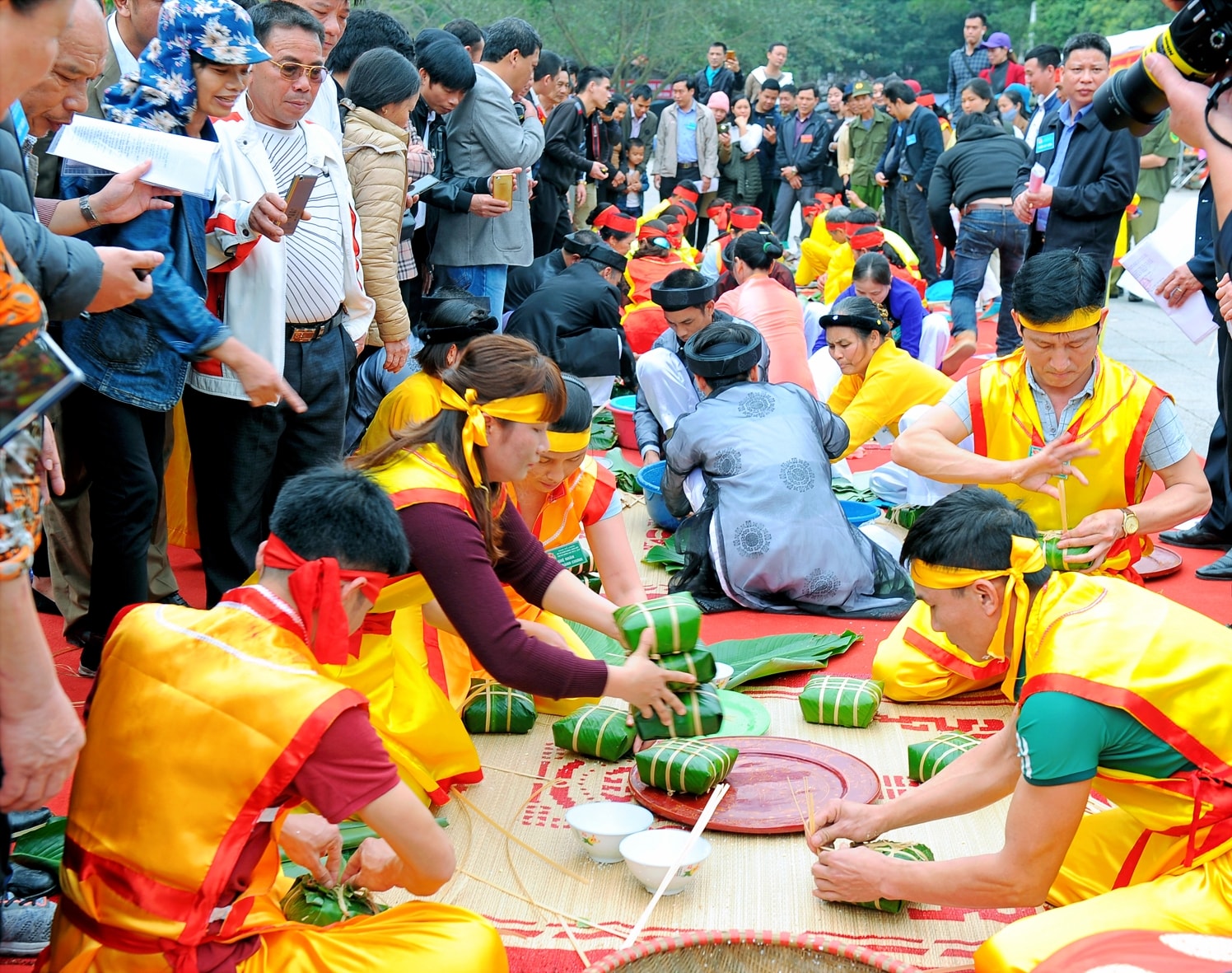
During the festival days, tens of thousands of visitors flock to the relic complex. The area around Luc Dau River, Dragon Mountain, Phoenix Mountain and Con Son Pagoda is filled with festival colours. Alongside traditional rituals, folk games, quan ho and cheo singing, and hau dong performances recreate the rich spiritual life of Red River Delta communities.
The interaction between rituals and lively community cultural activities gives the festival its enduring vitality.
Tran Van Hoang, a young visitor from Da Nang, shared: “What impressed me most was the festival’s sense of closeness. Here, residents are not only spectators but also participants and the festival’s owners. I clearly felt the community bond and the pride of joining hands to preserve and spread our traditions.”
For many consecutive years, state management agencies and local authorities have focused on restoring and organising rituals according to proper standards, while promoting and introducing the heritage’s values to residents and international friends. As a result, the festival has increasingly become a cultural and religious event with broad influence.
This year’s Con Son–Kiep Bac autumn festival is being held on a special scale compared with previous years. It is the first major festival after the merger of Hai Phong and Hai Duong, a cultural event immediately after the First City Party Congress, and the first festival since the Yên Tử–Vĩnh Nghiêm–Côn Sơn and Kiếp Bạc complex was inscribed by UNESCO as World Cultural Heritage. This further affirms the complex’s outstanding universal value and makes the festival a shared source of pride for Hai Phong residents and the whole country.
“Because traditional rituals at the Con Son–Kiep Bac autumn festival, such as seal opening, commemorations and processions on foot, have been classified by the Ministry of Culture, Sports and Tourism as national-level intangible cultural heritage, the organising committee carries them out in the spirit of preserving them intact and safeguarding their distinctive character,” affirmed Tran Thi Hoang Mai, Director of the Department of Culture, Sports and Tourism.
The event also contributes to cultural and spiritual tourism, creating livelihoods for local residents. Many families provide accommodation and tourism services and introduce traditional cuisine, thereby increasing income while helping preserve the identity of their homeland.
Amid international integration, as traditional values face many challenges, the Con Son–Kiep Bac autumn festival has become an even stronger spiritual anchor. It reminds the Vietnamese people to show gratitude to previous generations, cherish heritage and turn tradition into strength for the future.
Source: Collected source