
On November 14, Vice Chairman of the Hai Phong City People’s Committee Le Trung Kien conducted an on-site inspection of the management of operations at several riverside yards and depots in the city, including: the construction-material gathering yard at the foot of Thai Bridge (Phu Thai Commune), the foot of Han Bridge (Thanh Dong Ward), Tuynel Minh Du Brick Co., Ltd. (Tran Phu Commune), and the riverside yard area along Sea Dike I (Hung Dao Ward). He was accompanied by leaders of several relevant departments, committees, agencies and units.

After hearing reports from the Department of Agriculture and Environment, local authorities and relevant units on the operations, limitations and outstanding issues at these yards and depots, Vice Chairman Le Trung Kien instructed the Department of Agriculture and Environment to take the lead, coordinate with localities and relevant units, and review the actual operations of the yards and depots; and guide their owners to comply with the law during operation. For yards and depots that conform to the planning but have not completed the required procedures or still face obstacles, their owners must be guided to complete the procedures; relevant agencies and units must coordinate to resolve difficulties and ensure that the yards operate with all required conditions. Yards and depots that are inconsistent with the planning or violate regulations must be resolutely cleared.
The Department of Construction shall study, review and add riverside material-gathering yards to the planning. Local authorities shall coordinate with the competent agencies to work with yard and depot owners and record specific information on each site, including its location, current condition, land-use area, and land, investment, environmental, traffic, dyke and irrigation procedures. Minutes shall be made for any violations, clearly stating the measures taken and the results achieved by the owners, together with specific recommendations.
The Vice Chairman particularly reminded competent agencies and local authorities to implement solutions that ensure environmental sanitation and immediately remedy dust and dirt at these yards and depots. The People’s Committees of Phu Thai and Tran Phu communes and Thanh Dong and Hung Dao wards must strictly control riverside and main-canal areas and prevent new violations from arising…
According to the Department of Agriculture and Environment, many yards and depots are operating in the city, mainly serving the transshipment of construction materials, coal and goods. Some operate as enterprises or individual business households, while others are operated by organizations that lease land from projects. Most are located in riverside areas, mainly on riverbank land that has not been granted land-use-right certificates or is being used temporarily.
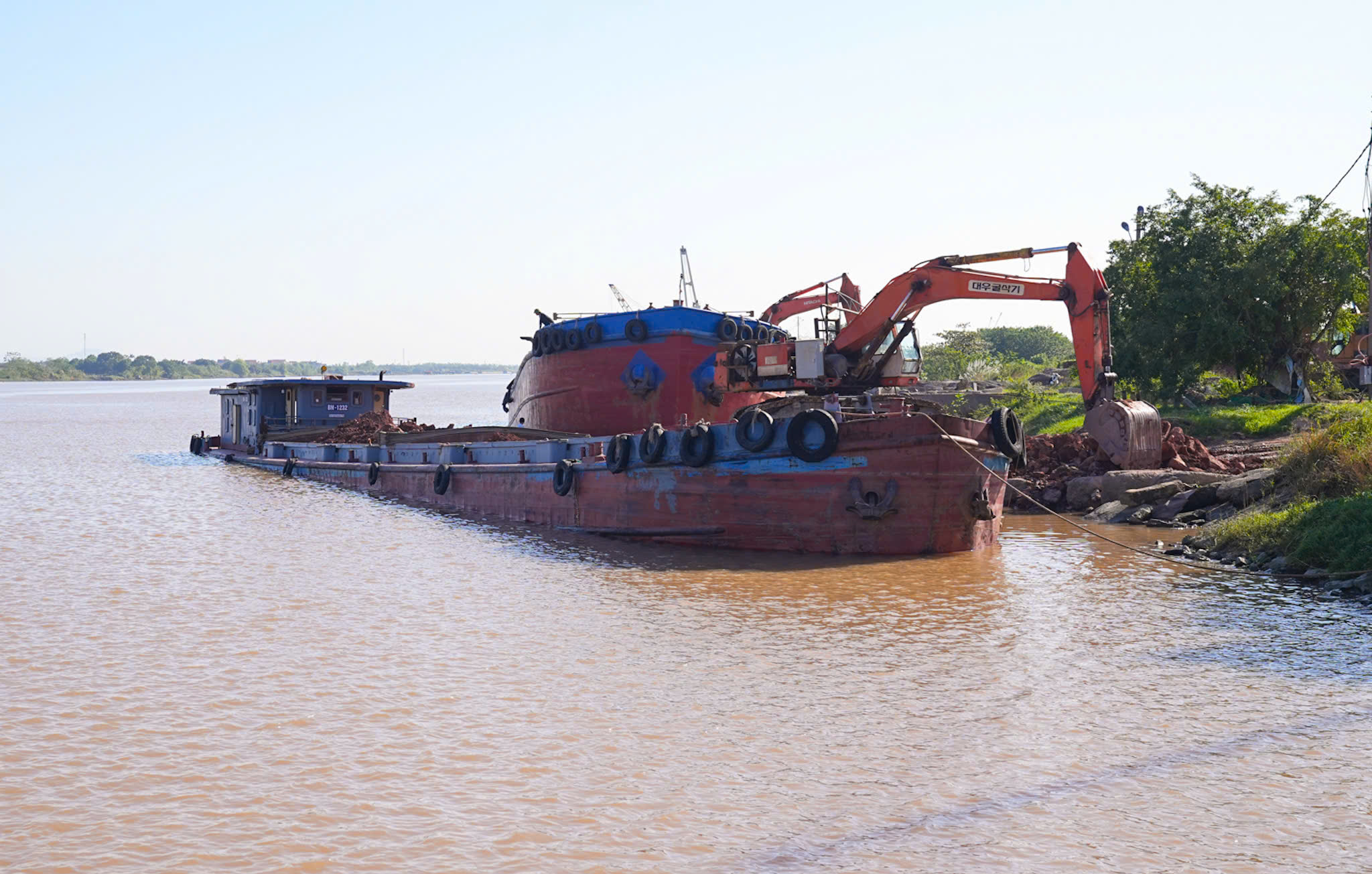
In recent years, the operation of riverside and internal-field canal yards and depots in the city has helped boost transport and the circulation of goods by waterway, which accounts for a large share, meeting the demand for materials for projects, construction works and technical infrastructure, and making significant contributions to the city’s socio-economic development. However, the operation of these yards has at times become complicated. Inspections have uncovered many violations involving investment, land, tax, dykes, traffic, minerals and the environment. In many cases, operators failed to comply with the law, used land without authorization or changed its purpose for unlicensed production and business activities, affecting public order and causing losses to the state budget.
The management of the yards and depots faces difficulties and obstacles because most organizations and business households do not have business registrations, or their registrations do not correspond to the names of the organizations or households actually conducting business. Local authorities’ management remains lax, and legal records do not fully meet regulatory requirements. Many organizations and business households use land for purposes different from those stated in their lease contracts with commune-level People’s Committees. Former commune-level People’s Committees signed contracts allowing organizations and individuals to trade in construction materials in violation of regulations.
Source: Collected